
Physical Security Integrated Management
Spatial Detection
Early warning at the perimeter. Awareness across protected spaces.
Perimeter sensors, radar, 3D LiDAR and video verification integrated into a coordinated security response.
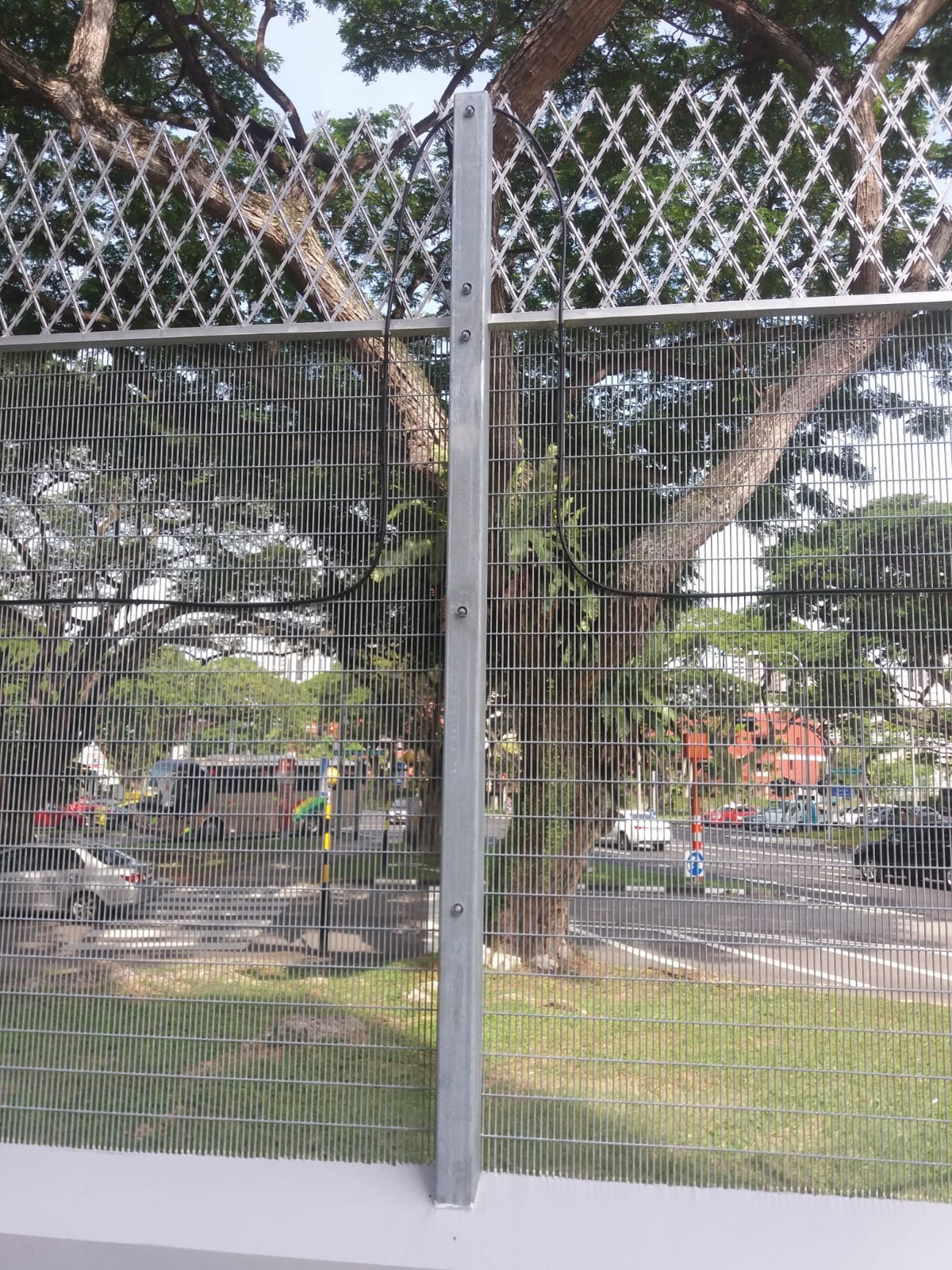
Detect intrusions early. Verify threats. Respond with confidence.
Many security incidents begin at the boundary of a property. An intruder may attempt to climb or cut a perimeter fence, cross an open yard, enter through an unmonitored boundary or approach a restricted facility after operating hours. Traditional CCTV surveillance records these activities, but without effective detection and alerting, security personnel may only become aware of an intrusion after it has occurred. A well-designed perimeter intrusion detection system provides early warning of potential security breaches, helping operators identify, verify and respond to threats before they escalate. We combine appropriate intrusion detection sensors with CCTV surveillance, video management software and compatible security management systems to create coordinated perimeter protection. Our approach focuses on reliable detection, accurate alarm localisation, reduced nuisance alarms, coordinated security response and long-term operational reliability
From boundary alarms to coordinated awareness.
Modern perimeter security systems go beyond conventional fencing and CCTV monitoring. Depending on the selected detection technology and integration architecture, the solutions can provide:
- Early Intrusion Detection: Detect attempts to climb, cut or breach perimeter fencing, as well as unauthorised movement across defined security boundaries.
- Alarm Zone Identification: Identify the affected perimeter zone or detected target location, helping security personnel respond to the correct area.
- Reduced False and Nuisance Alarms: Apply appropriate sensor technologies, detection rules and calibration to minimise unwanted alarms caused by environmental conditions.
- CCTV Alarm Verification: Automatically associate perimeter intrusion alarms with relevant CCTV camera views to assist security operators in verifying incidents.
- Automatic PTZ Camera Positioning: Enable compatible PTZ cameras to reposition towards detected intrusion locations through supported system integration.
- People and Vehicle Detection: Monitor movement across designated areas using suitable radar, LiDAR or AI video analytics technologies.
- 3D Spatial Awareness: Visualize objects and movement within protected spaces using Security radar, 3D LIDAR or AI-powered video analytics
- Centralised Security Monitoring: Integrate supported perimeter alarms with CCTV, access control and security management systems for coordinated monitoring and response.
Choose detection around the site.
No single perimeter intrusion detection technology is suitable for every facility. The appropriate solution depends on perimeter fencing, terrain, vegetation, environmental conditions, surrounding activities, site layout and the required level of security. A data centre with high-security fencing, an electrical substation with a large open compound and an industrial facility with extensive outdoor storage areas may require different approaches to perimeter protection. At FAIR Technologies, we adopt a technology-neutral approach to perimeter intrusion detection system design in Malaysia , selecting suitable detection technologies according to each site's requirements rather than relying on a single type of sensor.
| Technology | How it detects | Strengths and applications | Considerations |
|---|---|---|---|
| Fence sensors / fibre optic | Disturbances associated with cutting, climbing or tampering | Zoned or long-distance monitoring of fenced compounds; passive sensing fibre needs no electrical power along the fence | Fence condition, wind, vegetation and calibration |
| Buried sensors | Movement across an underground sensing zone | Concealed protection where visible sensors or fencing are unsuitable | Soil, drainage, nearby traffic and installation depth |
| Microwave / infrared | Disturbance in a detection field or interruption of a beam | Defined corridors, gates, rooftops and straight boundaries | Alignment, terrain, clear detection paths and environmental interference |
| Security radar | Radio-frequency sensing of moving targets | Wide-area day/night monitoring of open compounds and yards | Range, target characteristics, structures, vegetation and weather |
| 3D LiDAR | Laser distance measurements create a spatial view | Detailed tracking and classification in protected areas without relying on visible light | Sensor placement, occlusion, range and environmental conditions |
| AI video / thermal | Camera analytics detect people and vehicles in defined zones | Detection and visual verification; thermal works without visible illumination | Weather, image quality, camera position and thermal contrast |
Swipe across the table to compare all columns.
Capabilities vary by manufacturer, model and configuration. Final selection follows a site assessment and must be validated during commissioning. A layered design combines detection, video verification and a coordinated response.
Deter. Detect. Delay. Respond.
Perimeter protection needs early detection, physical delay and an effective response. Detection sensors do not themselves provide the physical delay of a fence or barrier. Our design approach draws on protective-security principles described by the UK National Protective Security Authority (NPSA).
Deter
Use appropriate fencing, signage, lighting, visible surveillance and controlled entrances to discourage intrusion.
Detect
Identify attempted breaches or unauthorised movement using suitable PIDS, radar, LiDAR and video analytics. Associate alarms with CCTV for verification.
Delay
Use appropriate fences, gates, barriers and protected internal zones to slow progress and provide response time.
Respond
Notify the control room, verify and track incidents, deploy personnel and activate approved security measures according to operational procedures.
Automated access restrictions and lockdown procedures must respect applicable life-safety requirements and emergency evacuation provisions. Detection capability, physical delay and response time should be planned together.
Perimeter intrusion detection technologies.
1. Fence-Mounted Intrusion Detection Systems
Fence-mounted intrusion detection systems monitor disturbances associated with attempted climbing, cutting, lifting or tampering with perimeter fencing. Depending on the selected technology, detection may use vibration cables, accelerometers, fibre optic sensing or other suitable devices. These systems can provide early warning while an intruder is attempting to breach the fence, rather than waiting until the individual has already entered the protected compound. They are particularly suitable for data centres, industrial facilities, telecommunications compounds, utility installations and other secured properties with established perimeter fencing. Appropriate fence construction, vegetation management and sensor calibration are important to achieve dependable detection while minimising nuisance alarms.
2. Fibre Optic Perimeter Intrusion Detection
Fibre optic perimeter intrusion detection systems use optical sensing technology to detect disturbances along instrumented fibre cables. Depending on the system, fibre optic sensing can provide detection zones or more detailed event localisation across extensive perimeter distances. Because passive sensing fibre does not require electrical power along the monitored fence line, it can offer advantages for large facilities and remote perimeter sections. These systems are suitable for industrial plants, utility compounds, data centres and other critical facilities requiring long-distance perimeter monitoring.
3. Buried Perimeter Intrusion Detection Systems
Buried perimeter intrusion detection systems monitor disturbances along protected underground sensing zones. Selected technologies can detect the movement of people or vehicles crossing designated areas without requiring visible above-ground detection equipment. This makes buried sensors suitable for applications where concealed perimeter protection is required or conventional fence-mounted detection is impractical. System design must consider soil conditions, drainage, nearby traffic, installation depth and the possibility of environmental interference.
4. Microwave & Infrared Perimeter Security
Microwave and active infrared technologies provide established methods of detecting intrusion across defined security boundaries. Microwave barriers monitor disturbances within an electromagnetic detection field, while active infrared systems detect interruption of an infrared beam between transmitter and receiver. They are commonly used for gates, rooftop boundaries, straight perimeter sections, restricted corridors and other controlled access areas. The effectiveness of these systems depends on suitable installation, detection path alignment, terrain and environmental conditions.
5. Security Radar for Perimeter Protection
Security radar uses radio-frequency sensing technology to detect moving objects within designated areas. Depending on the selected radar system, it can identify and track people or vehicles across large outdoor spaces. Radar technology operates independently of visible illumination and can provide reliable detection in many challenging environmental conditions. This makes it particularly useful for large compounds, electrical substations, industrial yards, utility facilities and remote installations. However, radar performance depends on the selected equipment, detection range, target characteristics, surrounding structures, vegetation and weather conditions.
3D LiDAR and spatial detection.
Conventional perimeter sensors primarily detect activity along a boundary. Advanced 3D LiDAR and spatial intelligence systems extend protection beyond the fence by monitoring movement within defined three-dimensional spaces. LiDAR technology uses laser-based distance measurements to build a spatial representation of the monitored environment. Supported software processes this information to detect, classify and track moving objects according to their position, size, speed and direction. This provides security operators with enhanced situational awareness, particularly in complex facilities where monitoring movement across an entire protected area is as important as detecting a boundary crossing.
What spatial detection can provide
Depending on the selected system, capabilities may include:
- Volumetric Intrusion Detection: Monitor defined three-dimensional spaces rather than only a physical fence line.
- Real-Time Object Tracking: Track detected people and vehicles across protected areas.
- Object Classification: Use spatial analysis and supported AI algorithms to distinguish relevant targets from environmental activity.
- Configurable Detection Zones: Define protected areas and detection conditions according to operational requirements.
- 3D Digital Twin Visualisation: Display detected activity within a virtual three-dimensional representation of the facility.
- Multisensor Monitoring: Combine compatible spatial sensors and other supported detection technologies.
- Automated Video Verification: Integrate detected events with compatible CCTV and PTZ systems.
Advanced spatial detection with Octave Coda.
Coda Spatial is a 3D LiDAR-based surveillance platform that combines volumetric detection, AI-powered object classification and digital twin visualisation. Unlike conventional perimeter systems that primarily generate boundary alarms, Coda Spatial enables security operators to observe and understand movement throughout protected spaces. Its capabilities include real-time object tracking, configurable detection zones, three-dimensional site visualisation and integration interfaces for compatible video management and physical security information management platforms. The platform supports a broad range of LiDAR sensors from different manufacturers and can incorporate supported radar and video data to enhance spatial situational awareness. For projects requiring advanced 3D design capabilities, Octave Coda Designer can support sensor placement planning, visualisation of detection coverage and simulation of selected intrusion scenarios before installation. These capabilities can improve planning and help identify potential coverage limitations, while actual performance must still be verified through on-site commissioning.
AI CCTV and thermal intrusion detection.
AI-enabled CCTV and thermal imaging systems provide another method of perimeter intrusion detection. Depending on the selected camera and analytics platform, supported functions may include:
- Person and vehicle detection.
- Virtual line crossing.
- Intrusion into defined restricted areas.
- Loitering detection.
- Event-based alarm generation.
- Automated display of relevant CCTV footage.
Thermal cameras can operate without visible illumination, making them suitable for monitoring dark environments where conventional cameras may struggle. However, detection performance can still be affected by weather, thermal contrast, viewing conditions and camera placement. For higher-security facilities, AI video analytics may be combined with dedicated perimeter sensors to provide layered detection and visual verification.
Connect detection, verification and response.
One of FAIR Technologies' core strengths is integrating multiple electronic security technologies into a coordinated enterprise environment. Rather than deploying perimeter sensors, CCTV cameras and access control systems as separate installations, we evaluate how these systems can operate together. Depending on manufacturer compatibility and available integration interfaces, perimeter intrusion detection systems may be connected to:
- IP CCTV surveillance cameras and PTZ cameras.
- Honeywell MAXPRO VMS and other compatible video management platforms.
- Honeywell Pro-Watch enterprise access control systems.
- Intrusion alarm monitoring systems.
- Security control room workstations and video walls.
- Supported security lighting and audible warning equipment.
- Compatible third-party security management platforms.
An integrated perimeter intrusion event
Detect
A sensor identifies a disturbance and generates an alarm.
Locate
The system identifies the affected zone or target location.
Verify
The associated CCTV view appears at the monitoring workstation. A compatible PTZ may reposition towards the event.
Respond
Operators assess the incident and initiate the appropriate response.
Record
The supported alarm or security management platform records the event.
Integrations depend on manufacturer compatibility, available interfaces and the approved system design.
Protection across industries.
- Telcos and data centres: protect unmanned towers, exchanges and data centre compounds, and alert remote monitoring teams to any breach
- Utilities and substations: secure remote substations and plants against intrusion, theft and vandalism, and monitor hazardous zones
- Factories and industrial sites: protect boundaries, warehouses and storage yards, and alert when people enter restricted or hazardous areas
- Banks and financial institutions: protect cash centres, data centres and disaster recovery sites with layered detection
- Property developers and commercial buildings: secure construction sites, building surrounds, rooftops and car parks after hours
- Universities and schools: monitor campus boundaries and after-hours areas without adding more guards
Designed for real site conditions.
- Site survey: terrain, fence condition, vegetation, nearby roads and drainage all affect detection, so we survey every section before recommending technology.
- Zoning: dividing the perimeter into zones, each covered by a camera, means every alarm has a location and a view.
- Tuning for the environment: Malaysia's heavy rain, strong winds and wildlife cause nuisance alarms if sensors are not tuned. We calibrate each zone on site and refine it after installation.
- Power and network: remote boundaries need reliable power, surge protection and network connections, which we design with our electrical and IT teams.
- Maintenance: vegetation growth, fence damage and sensor drift reduce performance over time, so regular testing and maintenance keep detection reliable.
How we deliver
- Assess: we survey your site, perimeter and existing security systems, and identify vulnerable sections.
- Design: where appropriate, we use 3D planning and intrusion scenarios to assess sensor and camera coverage before installation.
- Integrate and commission: our team installs, connects and tunes the system with your CCTV, access control and alarm monitoring.
- Test: we walk-test every zone to confirm detection and alarm response before handover.
- Train and maintain: your operators learn to verify and respond to alarms, and we maintain and refine the system over time.
Frequently asked questions.
What is a perimeter intrusion detection system?
It is a system of sensors that detects people or vehicles crossing, climbing or cutting through a site's boundary, and raises an alarm with the location of the intrusion. It usually works with CCTV, so operators can verify alarms visually.
What is 3D spatial detection?
It uses LiDAR sensors to create a live 3D view of an area, then tracks the position, size, speed and direction of people and vehicles within it. Unlike fence sensors, it protects whole areas, with supported alarms displayed on a 3D model of your site.
Will rain, wind or animals trigger false alarms?
Any sensor can raise nuisance alarms if poorly chosen or tuned. We select technology suited to each environment, use object size and behaviour filters, and verify alarms with video to keep false alarms low.
Can cameras alone protect our perimeter?
AI video analytics can detect intrusions, but performance depends on lighting, weather and camera position. For high-security sites, we recommend combining a dedicated perimeter sensor with cameras for verification.
What is the difference between radar and LiDAR?
Radar covers wider areas and works well in many weather conditions. LiDAR builds a more detailed 3D picture over shorter ranges, so it can classify objects precisely. Many sites use both for different zones.
Can perimeter detection work with our existing CCTV and access control?
Yes, where compatible interfaces are available. We integrate perimeter alarms with your video management and access control systems, so alarms can trigger camera views, approved access restrictions and alerts within the agreed response workflow.
Talk to our team
Book a perimeter security assessment.
Concerned about vulnerable boundaries, remote sites or nuisance alarms? Our team will survey your perimeter, identify weak points and recommend suitable detection, verification and response for each zone.